Moving boxes…think out of the cardboard!

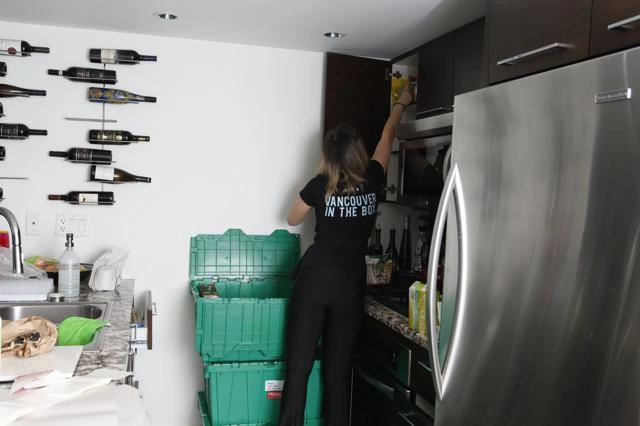
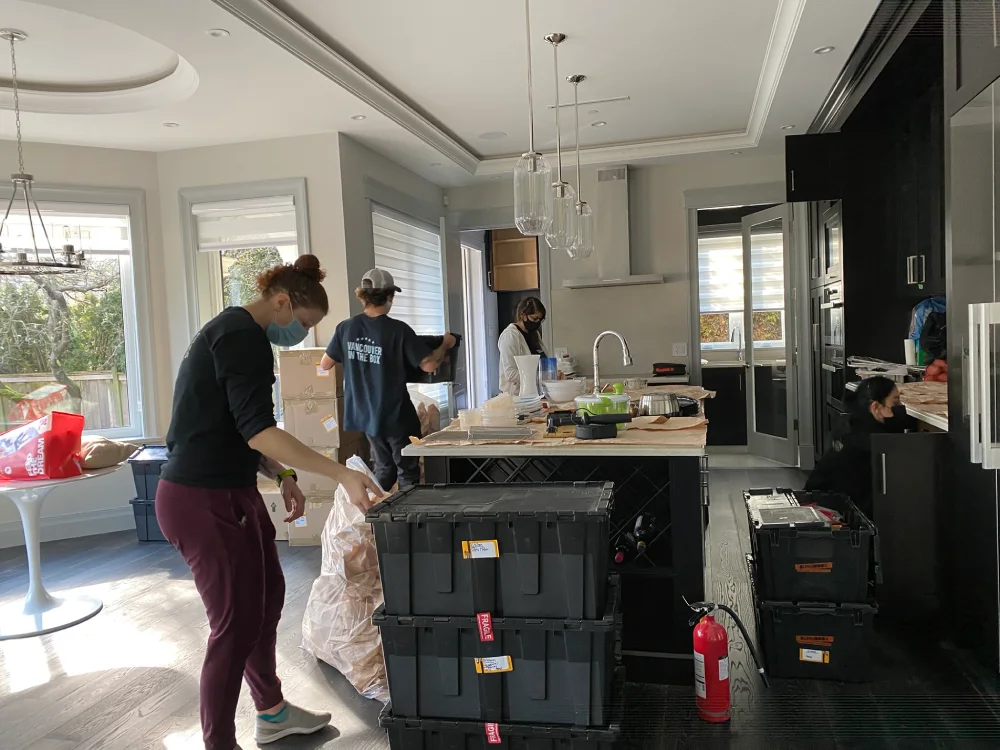
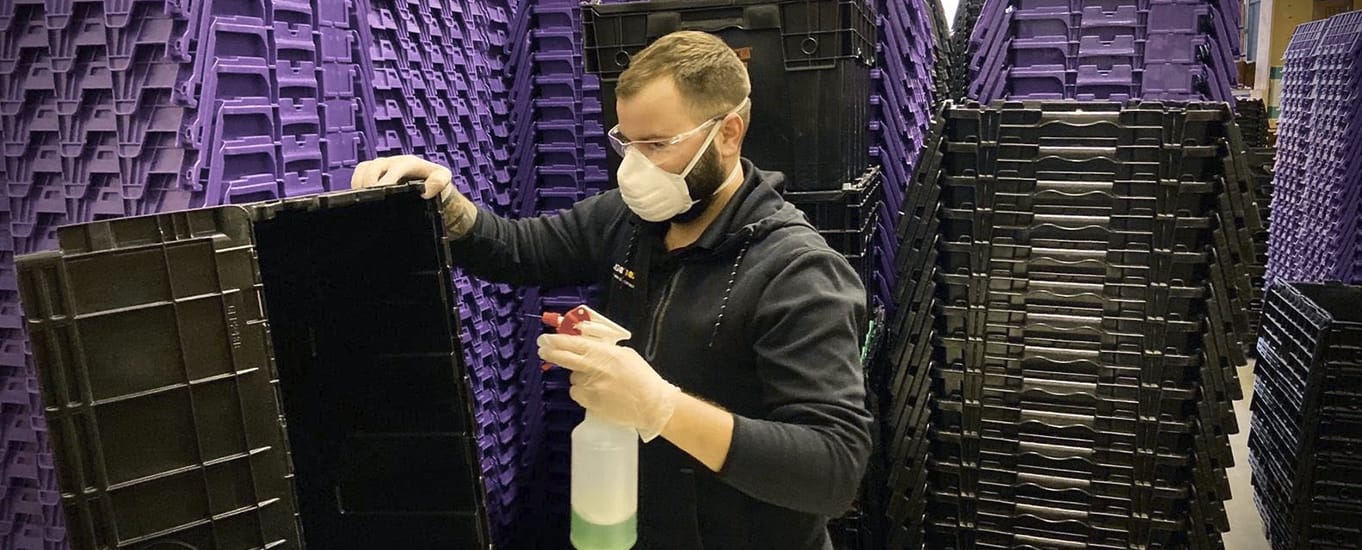
My team has packed hundreds of houses, household, toys, books, food.  We’ve packed for local and overseas moves. After all this we are all agreed on one thing  -  we love plastic rental boxes!

Imagine yourself moving into a new apartment. One of those Yaletown high-rise buildings. Slowly you unpack your belonging from cardboard boxes, when the boxes are empty you break them down and push them into the elevator. Busy neighbours rush past,  smiling at you knowingly (they have been there before). Next you are struggling with that load of cardboard, pulling it out onto the parking lot floor.  Now you wish you had someone to help. Every time you need to open a door  you need the key!

But, you are almost there….or so you think. Next you start your “trip” around the parking lot looking for the recycling bin….trailing a path of cardboard  behind you. Three more trips to go!  At least now you know where the garbage floor is!

There is a better way to move and  to reduce stress from the start.  Simply order plastic rental boxes.

5 top reasons to use plastic rental boxes:

  1. You rent plastic boxes for a week or two (or more). Prior to moving day -they are delivered to your home, and after moving day they are picked when you finish unpacking! No trips to the garbage!
    Note: We always order the boxes to arrive at the morning of the packing day. If we unpack for you, we will arrange pick up for the same day.
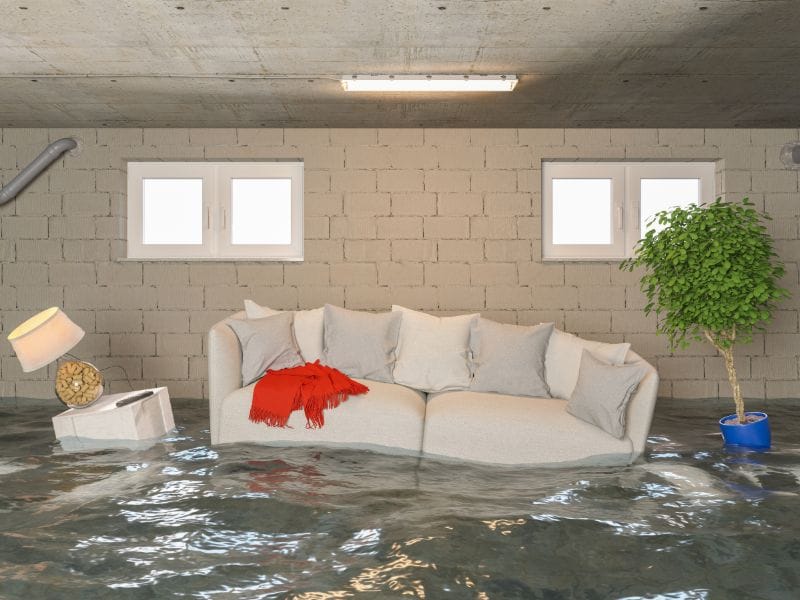
  2. A normal day in Vancouver is a rainy day. Your belongings won’t get wet while the movers load and unload the truck.
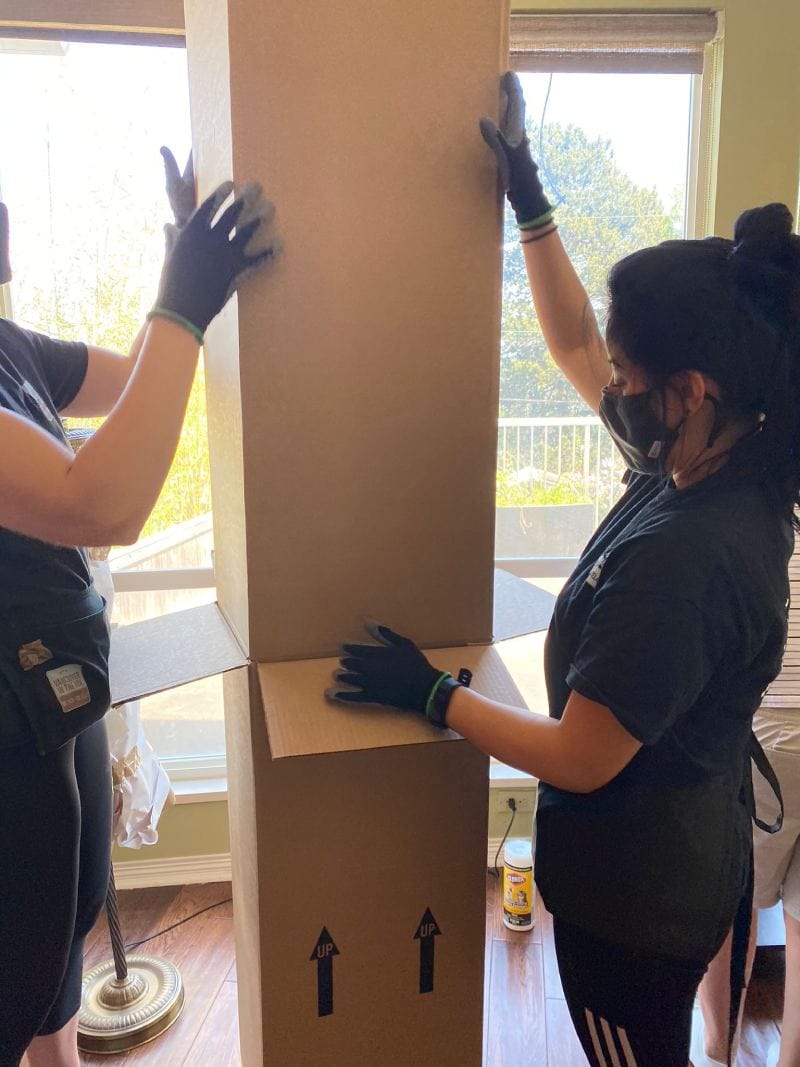
  3. Plastic boxes are easy to work with. It saves my packers at least an hour. Unlike cardboard, we don’t need to  tape the tops.
  4. Easy to open and close. If you, by accident, pack your child’s most important stuffed toy in a box, all you have to do is open the lid, take it out and close it back up. (You’d be surprised how often this happens.)
  5. Plastic rental boxes are reusable and environmentally friendly.

Ordering plastic boxes, is the first step to reduce moving stress.

Call Vancouver in the Box, and let the experts pack and unpack for you.

Share |

Relocation: Some important tips!

This summer we handled quite a few relocations to new countries.  These included trans-continental shipping to the UK and New Zealand,  inter-province shipping within Canada, (British Columbia to Manitoba, Ontario), as well as shipping to the USA.

If you’re considering a long distance move, it pays to get a full understanding of the requirements specific to every country, as these almost always vary from country to country – even province to province within Canada.

For example, New Zealand  has a very strict bio security policy. Things like tea, any untreated wooden products and even dried flower arrangements, for example, are forbidden.

This is the quick guide about what not to pack to New Zealand.

The rules to enter USA, are a little less strict, so if you intend to pack food with your belongings make sure it is packed and labelled in the original manufacturers packaging. Note – no meat, poultry or any dairy products (milk, eggs and cheese) are allowed.

More information at the Unites States Custom and Border Protection.

Pet Advisory:

If you are planning to take your pet with you, plan well in advance – like a few months! Pet travel and immigration rules are  different  for every country, varying in degrees of strictness. The UK, for instance, will quarantine your pet for at least 6 months if it does not  meet all the rules of the pet importation program.

Learn more about the UK pet travel rules.


Inventory list:

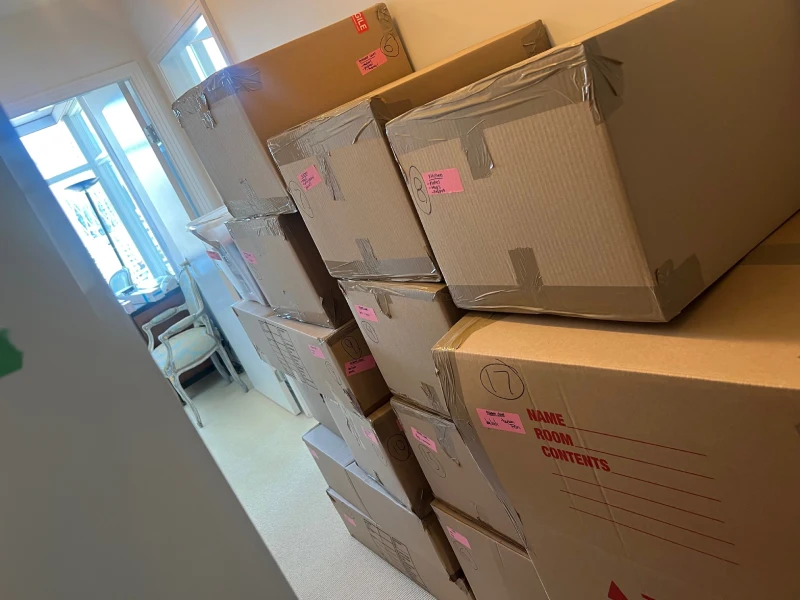
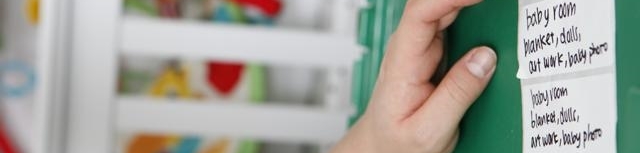
It’s important to label all the boxes that you have packed, and number them. Most countries ask that you provide an inventory list, sometimes 24 hours ahead of shipping.  The list you should describe (in general) what’s contained in each box. We also add the world “used “on the list to highlight that these are personal used items.

One of our relocation to USA, few weeks ago, contained almost 200 bottles of wine. It was a private collection and we decided to be very detailed so our client will have a smooth move.

We took pics of all every bottle and marked every shelf at the wine cabinet with a letter.

We then packed two shelves with bottles in each container, then  marked the boxes with letters. The result: a no-complication border crossing at the USA checkpoint.

Relocating?  Be ready, plan ahead and make sure you know the rules. It will save you both time and money.

Share |

Do you have a disorganized student?

Some people are naturally less-organized than others. When it comes to disorganized students, a lack of organization may be a reason to avoid tasks or homework. Or it could be something more serious.

If your student has learning disabilities they may also have poor planning and organizational skills. A little known fact is that some students with learning disabilities have great difficulty estimating time and they often lose things.

Whether your child is naturally disorganised or has a learning disability, there are ways to simplify their daily tasks:


Daily routine & getting ready to school

  • Develop a checklist, written or pictorial that highlights their daily routine in one place. Encourage your child  to help by making the list, coloring the pictures and deciding where to hang it up.
  • Create a box for each day of the week to put books for school and homework in. For example, a project that they finished on Monday and need to bring back on Wednesday will go to the “Wednesday” box.

Landing zone & communication board

  • You don’t want your kids going to school wearing a pink shirt, on a “Canucks Fans day”. (you missed that note- BLUE shirt required). When your child brings home notes and tasks for you, make sure that they have a landing area – a basket or a drawer – where they empty their backpack so that you know exactly what came back from school.
  • With older students, put up a communication board where they can pin their notes from school before running out to their afternoon activity

Time management

It’s easy to lose track of time. Almost everyone has a cell phone and some kids have smart phone with timers or reminders. Break down a big job intro small assignments by prioritising and setting a timer.

Here is a friendly-free online timer that can be used:

http://www.online-stopwatch.com/

Closet

Group items by activity. Your child has a soccer game and he can’t find the team shirt among all the tops? Pack all the soccer clothes ( socks, tops, bottoms)  in one drawer or a basket so that it will be easier to access.

Labels

It’s easier to follow rules then to make new ones every day.

Before labelling everything, I recommend checking the items your child doesn’t put away or constantly forgets where they go.

You can label above every child’s spot at the entrance closet.

Use a paper wall and trace your child foot. Stick it on the floor where the shoes should be.

Label shelves in the closet, so your kids can put things away easily (one less task for us!)

How to keep a clean desk

Use dividers in the drawers for school supplies. (cutlery trays work well )

Avoid dumping everything in one big basket where you can’t see what’s inside.


School locker:

Narrow lockers can be very tricky to organise and disorganised students may struggle to find things. To help, make a list of what’s need to be in the locker.

Divide the locker and designate a spot and container for every item such as school supplies, personal items etc, then label the boxes.

Use shelf extensions to expand usable space.

Hang up their schedules and the list of their locker contents.

Put a labelled bag inside for items that should go back home.


It’s all about building the right systems that can help student become more organized and efficient at school.

Share |

How to get your kids involved in organizing their rooms

Enlisting your kids help is all about the timing. Now that it’s the end of the school year it’s a great opportunity to get the kids involved in sorting out what should stay or go.


Summer tasks: Start the process of cleaning up and getting organized once they are finished school. Make a “countdown calendar” with tasks (and prizes if you wish).

Making room for new things: Kids find it hard to get rid of their stuff. You can help by mentioning the positive – getting rid of old stuff will make room for new toys and items that are right for their age.

The donation pile: Suggest donating unwanted items to the daycare, a charity, a neighbour, or a friend. Kids  feel better if they can find a good new home for their old toys.

Pick your favourites: Give your kids the chance to choose 5 of his or her favourite toys to keep. (The parents should decide how many toys and kids should choose which ones!)

Storage for toys: Ask your kids to sort their toys by “families”.  They can put all the Lego parts together, all the  Barbie’s together, all the stuffed animals together – and so on. Store the toys by “families”. Each one in a small container rather than one big box for all the toys.

Arts & crafts from school: We are the biggest fans of our little artists and in a perfect world we would keep every piece they have made. But of course, we can’t keep everything. A good idea is to make a box for each child. You can decide how big the box is and this can house the top 5 pieces of art work for each year.

Kids of different ages:  When there are a few kids in the house, some toys may not be right for the oldest child any more, but the youngest child may not ready for them yet.  These toys need to be put away. Pack them up and store them on a shelf. These toys will remain in good condition until the youngest child is ready for them.  You will be surprised how much money it saves you in the long run.

Moving with kids:

After sorting the toys,  your child  should ready to pack only what you have both decided to take with.

Not only does it saves you time and money, but you will have taught your kids how to manage their stuff.

Helping to pack:

Labels, stickers and photos: Ask the kids to take pictures of their items. Print the photos on stickers. They can pack the toys and stick each label onto the box.  Or they can make their own labels by drawing the contents of the box on the outside.

Scrapbook: Buy your kids a scrapbook to help them design their new room.

A day before the moving day

Personal backpack: Encourage your kids to pack a few toys, an MP3 player and books.  In this bag you should also put clothes, toiletries and medicine.  Take this bag with you to the new house (don’t send it with the movers).  While everything is still in boxes, your kids will have all they need to “survive” the first night in a new place.

A great recommendation for a book that I found at the public library:

“Ira says goodbye” by Bernard Waber.
Ira found out that his best friend Reggie is moving. They had their own tree house and secret hiding place. They even put their turtles together so  thatthey could be good friends too… and now Reggie is moving away….

How  do the good friends deal with the change?

Get the book and find out!

Share |

Green packing and moving tips

  1. Be sure to have recycling bins and garbage bags – Before you start packing, you need to get rid of things that you don’t need. A good example are clothes that you haven’t worn for the last two years and that are taking up space you could use for new clothing.  This applies to books, toys and home decorations.
    Find here where to recycle a certain material: http://rcbc.bc.ca/
  2. Throw out the fridge – or at least a lot of it – Food and vitamins are not like a good wine. They don’t get better with the age!  Go through your pantry, medicine cabinet and vitamins; throw away any food that has expired.
  3. Give stuff away - to friends, family, church, or community.
  4. The “Maybe” Box – Sometimes it’s hard to let go. If you feel conflicted, put it in a “MAYBE” box that you have prepared especially for tough decisions. After few days, go check in with your ‘maybe box,” your clarity will increase and you may see things differently.
  5. Use containers, suitcases etc to pack in – Take a look at your home. You probably have some plastic containers, suitcases and camping bags that can be use for packing. Sometimes these bags are stored in the attic and they are full of dust, clean them use them before you buy or rent boxes. If the containers are loaded with toys or Christmas decorations, have a look and see if there is something that you can get rid of. If you still have space in the container, try to combine stuff from the same type into one box.
  6. Use plastic rental boxes – If you are going to unpack most of the boxes in your new home, I would highly recommend the rental plastic boxes (Like Frog Box).  They drop them off and pick them up from your new place. They are easy to work with, eco-friendly, and there is no need for packing tape so it saves you time and money.
  7. Soft Items – Place soft items (like clothes) in bags and suitcases.
  8. Fragile Items - Plastic containers are best to pack dishes and other fragile treasures.
  9. Wardrobe Boxes – They are easy to use, and save time, you can pack the closet at the last minute. All you need to do is place the hangers with the clothes as they are in your own closet. At the bottom of the wardrobe put the empty hangers.
  10. Packing supplies Always use unprinted newspaper to wrap the dishes. When packing fragile things, first pad the bottom of the box with shredded paper, kitchen towels, or tissue paper.
  11. Manage your time properly - Start organizing and packing at least one month before the moving day. Start with things that you don’t use daily. Your ski suit, snow boots, winter clothes, most of the books, CD’s and computer games and other things you can do without for a few weeks. Start slowly, and dedicate an hour or two every day for packing.
  12. Label every box Don’t label the top – always on the side.  So when you stack them one on each other, you can tell what’s inside.

Call for a free – no obligation quote today.  We can save you time, money and a lot of stress.

778.228.6976

Limor Friedman is Vancouver’s Professional Organizer and expert in packing and unpacking strategies.

Share |

Top tips for home organization

Turn Your House Into an Organized Home:

Closet organizing

A fact: We wear only 20% of our clothes for 80% of the time.

  • Take a hard look at your wardrobe. How long has it been since you wore that sweater, jacket or pair of trousers?
  • Keep only the clothes that look good, make you feel good, and reflect your lifestyle.
  • Don’t keep cloths that used to look good on you, wrong size, lost color and shape.  If you DO lose weight, you won’t want to wear your old “fat’ clothes anyway!
  • Ask a friend to help!  Ask for an objective opinion on what to keep, share what you have, laugh while you cry.

In the Kitchen

A fact: A single plastic bag can take up to 1,000 years to degrade. Plastic bags remain toxic even after they break down. Buy your own shopping bags.

  • Store your most frequently used items in the most accessible places.
  • Food and vitamins are not wine! They don’t get better with time! Go through your pantry, medicine and vitamins cabinet, throw away any food that has expired.

Use shallow drawer for smaller items and deep drawer for big items.

Storage

A fact: Storage is not for useless items!

  • Storage is ideal for seasonal, Christmas decorations and things that you don’t use daily- but not for useless items. Get rid of items that you don’t need, do not store them.


  • The goal is to keep things accessible! If you can’t find the item that you stored you will end up buying a new one.
  • Keep things in clear containers so you will know what’s inside. Don’t keep them in plastic bags-you will never know what’s hidden and if this is just a puffy empty bag!

Donate

A fact: one’s useless item is another one’s treasure.

  • Make a box for donation: things that you don’t use anymore. When the box is full take it to your favourite donation place- or call them to pick up!


Resources to take Donations

DDA – Developmental Disabilities Association

http://www.develop.bc.ca/contribute/donate-clothes/pickups.html

  • Orphan Aid Thrift Store – 7889 Edmonds St, Burnaby, BC V3N 1B9  604-521-1013
  • Home start foundation – A non-profit Christian humanitarian organization helping people re-establish a home. Working in partnership with over 70 member agencies, give donated home furnishings to people in need.

http://www.homestart.ca/donations.htm

More Resources for Green living

Find out where to recycle a certain material: http://rcbc.bc.ca/

  • Learn what are the green options for your house at:  Light House Sustainable Building Centre; an enterprising non-profit society dedicated to advancing and catalyzing sustainability
  • Learn bike routes, safety tips for cyclists, and bike routes in Vancouver:Vancouver area cycling coalition
Share |

Garage Make Over Before and After

Garden tools and sporting gear comes in different shapes and sizes (bicycle, kayaks, balls, golf clubs, fishing rods, skates).  The variety of sizes and shapes is what makes storage difficult to manage if it is disorganized.

Before

This family loves sports and outdoor activities, however their gear took up valuable floor space, and they couldn’t find anything. On the floor: ski shoes, helmets, boxes full of camping items and garbage.

Our plan

To maximize the storage and find a designated space for each item.


After

  • We sorted the items- Camping, climbing, ski suits. Everything went to its place. The floor is clean!!
  • We installed hanging racks for ski and garden tools.
  • We installed storage system that can hold all the sports equipment.
  • A “bicycle shadow” added some style to the place.
  • Helmets & gloves on hooks and in the basket
Share |